You Don't Need Another Diet.
You need to understand why you keep turning to food when you're not physically hungry.
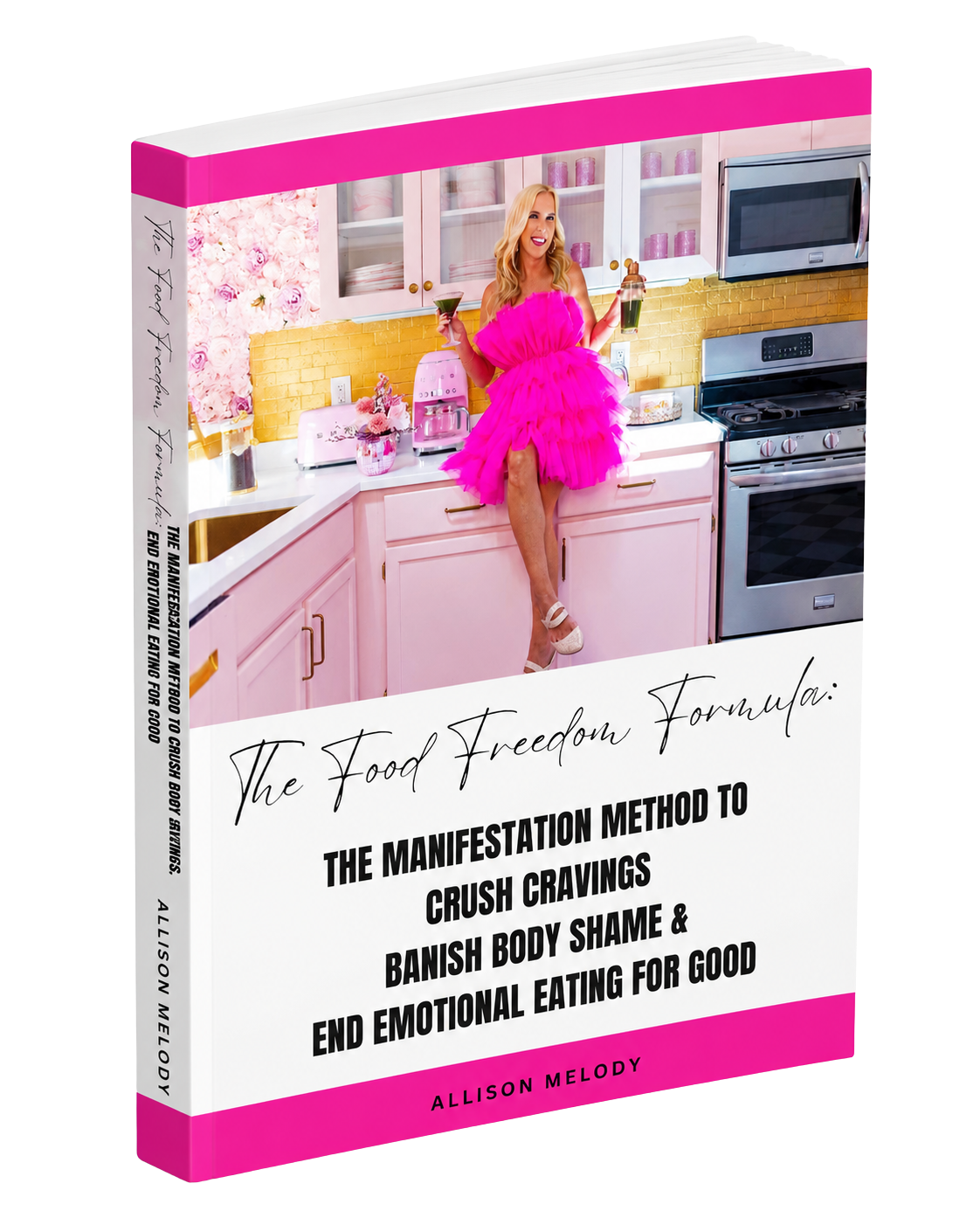
The Food Freedom Formula is a practical, compassionate guide to help you uncover the emotional patterns behind cravings, food guilt, body shame, and emotional eating — so you can create a healthier, more peaceful relationship with food.
- No extreme restrictions.
- No punishing meal plan.
- No waiting until Monday to start over again.
Digital ebook. Download immediately and begin at your own pace.
Does this sound familiar?
You know which foods are considered healthy.
You've tried diets, meal plans, cleanses, challenges, medications, or "starting fresh" more times than you can count.
You may even do well for a few days. Then life happens.
You have a stressful day. You feel lonely, overwhelmed, exhausted, bored, angry, or disappointed.
Suddenly, you're standing in the kitchen reaching for something you never planned to eat.
Then comes the guilt. You criticize yourself. You promise tomorrow will be different. But eventually, the cycle begins again.
The problem may not be that you lack discipline. The problem may be that you've been trying to change what you eat without understanding why you're eating.
Emotional eating is not just about food.
You can know exactly what you intended to eat — and still struggle to follow through when your emotions take over. Another list of "good foods" and "bad foods" won't solve the deeper issue.
The Food Freedom Formula helps you slow down, recognize your patterns, and respond to your needs with awareness instead of automatically reaching for food.
Food can become
- A reward after a difficult day
- A distraction from stress
- Comfort when you feel lonely
- A way to avoid uncomfortable emotions
- Something to do when you feel bored
- A temporary escape from pressure
- A reason to criticize your body
- A way to feel in control when life feels out of control
What happens when the food noise comes back?
Right now, GLP-1 medications — semaglutide, Wegovy, Ozempic, tirzepatide, Mounjaro, Zepbound — are all the rage. And listen: these medications can be super-helpful tools for many people.
They may reduce appetite, help people feel full sooner, reduce cravings, support meaningful weight loss, and improve certain health conditions. Sounds like a total win, right? For some people, it absolutely can be.
But it doesn't tell the whole story. Because medication cannot heal the emotional reason you may be overeating.
It can't process the breakup that sends you searching for dessert. It can't heal the childhood wound that taught you to use food for comfort. It can't teach you to love your body, listen to your hunger cues, safely feel your feelings, or stop using food to numb stress, loneliness, anger, fear, or pain.
Can a GLP-1 quiet the food noise?
Yes. And that relief can feel life-changing.
But what happens if it stops?
Research shows weight regain is common after GLP-1 treatment is discontinued — though individual outcomes vary.
Because quieting the food noise is not always the same as healing the root of the food noise.
If the emotional patterns underneath are still there, they may still be waiting for you: the loneliness, the grief, the stress, the pressure, the need for comfort, the belief that you have to earn food, the feeling that your body is the enemy.
A GLP-1 may be one helpful tool in your healing toolbox. But it's not the entire toolbox.
And listen — I'm pro-peptides! I love my anti-aging, keep-me-young-and-healthy-forever hacks. I get it. But no matter how helpful the tool, it still can't do the deeper emotional work for us.
A medication may quiet the food noise. This book helps you explore what may be underneath it.
What if you could stop fighting yourself around food?
This book doesn't promise overnight perfection. It gives you practical tools to understand your behavior and begin changing the patterns that have kept you stuck.
The Food Freedom Formula
The Manifestation Method to Crush Cravings, Banish Body Shame & End Emotional Eating for Good.
Created by Allison Melody, host of the award-winning Food Heals Podcast and author of Food Heals.
This guided ebook brings together the practices Allison has used through her own journey with cravings, sugar, emotional eating, grief, body image, and personal healing — designed to help you explore the emotional side of your relationship with food while taking practical action toward how you want to feel.
Inside The Food Freedom Formula, you'll discover:
Identify Your Emotional-Eating Patterns
Notice when, where, and why cravings show up so you can separate physical hunger from emotional triggers.
The Food & Mood Journaling Method
Track what you eat, how you feel, and what happens afterward to uncover patterns that had gone unnoticed.
Mindful-Eating Practices
Slow down, become present at meals, savor your food, and better recognize hunger and fullness cues.
Goal-Setting for Real Change
Create specific goals, reinforce them consistently, and take manageable daily actions.
Self-Forgiveness & Inner-Child Work
Explore the judgments and painful memories that may influence how you treat your body today.
Guided Meditations & Reflection
Meditation, breathing, visualization, and journaling to create space between a feeling and your response.
Tools for Understanding Food Noise
Explore whether your thoughts about food are physical hunger, emotional triggers, learned behaviors, or the need for control.
A Personalized Approach to Wellness
Pay attention to how different foods and routines affect your individual body — no one-size-fits-all plan.
Strategies for Getting Back on Track
Respond to hard days without deciding you failed or need to wait until next week.
This is about awareness, not obsession.
When you become aware of your triggers, you have more opportunities to make a conscious choice.
When you understand your emotions, you can begin meeting your actual needs.
When you stop punishing yourself, you can create change from self-respect instead of shame.
And when you return to your tools after a difficult moment, one choice no longer has to become an entire week of giving up.
You are not the problem.
You are not lazy. You are not weak. You are not broken because you sometimes use food for comfort.
You may simply have learned patterns that once helped you cope. Those patterns may have offered temporary relief from stress, grief, fear, loneliness, pressure, or pain.
But a coping mechanism can eventually become a cycle that no longer serves you.
The answer is not more self-hatred. The answer begins with awareness, honesty, compassion, and consistent practice.
This is for you if
The Food Freedom Formula may be for you if:
- You eat when you're stressed, lonely, bored, or overwhelmed
- You promise yourself you'll start over on Monday
- You know a lot about nutrition but struggle with consistency
- You feel guilty after eating certain foods
- You criticize your body in the mirror
- You alternate between restriction and overeating
- You use food as a reward at the end of the day
- You struggle most with late-night cravings
- You feel like one imperfect choice ruins everything
- You experience constant food noise
- You use a GLP-1 and know there's emotional work medication can't do for you
- You stopped a GLP-1 and feel the food noise has returned
- You're afraid of depending on medication forever
- You want to build supportive habits alongside your medication
- You want practical tools rather than another rigid diet
- You're ready to examine the emotions beneath your habits
- You want to treat your body with more compassion and respect
This may not be for you
This may not be the right fit if:
- You want a strict meal plan with every meal prescribed
- You want a rapid-weight-loss guarantee
- You're unwilling to journal, reflect, or practice the exercises
- You want a solution that requires no participation or behavior change
- You're looking for medical treatment for an eating disorder
- You want advice about starting, stopping, or changing prescription medication
This book is educational and supportive, but it is not a replacement for individualized medical care, psychotherapy, nutritional care, or eating-disorder treatment.

Hi, I'm Allison Melody.
I'm the host of the Food Heals Podcast and the author of Food Heals.
For years, I immersed myself in nutrition, alternative health, and plant-based living. But even after learning what healthy eating looked like, I still struggled with emotional eating, sugar cravings, and criticizing my body.
That experience taught me something important: knowing what to eat is not always enough.
I had to look at what was happening emotionally. I had to recognize when I was eating because I was stressed, grieving, overwhelmed, or trying not to feel something. I had to learn to slow down, listen to my body, journal, meditate, forgive myself, and respond differently when cravings appeared.
I created The Food Freedom Formula to bring those tools together in one guided resource — not because I believe you should be perfect, but because I believe you deserve to understand yourself, care for your body, and stop spending so much of your life fighting with food.
Why another diet may not have worked.
Most diets focus on two questions:
Those questions can be useful. But they leave out another important question:
- Are you physically hungry?
- Are you trying to calm yourself after a difficult conversation?
- Are you rewarding yourself because you worked hard?
- Are you trying to avoid sadness, anger, loneliness, or fear?
- Are you restricting food because it helps you feel in control?
- Are you thinking about food because your body needs nourishment?
- Or is the food noise connected to an emotion, wound, habit, or unmet need?
Until you understand the pattern, it can be difficult to change it consistently. The Food Freedom Formula helps you investigate the emotional pattern rather than simply blaming yourself for the behavior.
The Manifestation Method for Food Freedom
Remove the blocks that hold you back from living your healthiest, happiest life — and create space to manifest your desires.
Appreciate. Believe. Take Action. Receive.
Appreciate
Get into appreciation of what you do have. Appreciating abundance — and your body as it is right now — sets the foundation for change.
Believe
Believe you can be healthy, that you deserve a healthy body, and that you can dissolve the blocks holding you back.
Take Action
Dreams thrive on action. Tangible steps are the bridge that connect aspirations to reality.
Receive
Relax with an inner knowing that you will receive — open, willing, and without attachment: this or something better for the highest good of all.
Your path toward food freedom.
Begin recognizing your food choices, cravings, food noise, emotional states, physical reactions, and common triggers — without immediately judging yourself.
Use journaling, meditation, self-reflection, and mindful eating to explore what may be driving the pattern.
Practice new actions that support your goals, your body, and your emotional needs.
You don't have to master everything at once. Keep practicing until healthier choices begin to feel more available and natural.
A complete food-freedom toolkit for $27.
- The Complete 106-Page Digital EbookRead it on your phone, tablet, or computer.
- A Guided Three-Week FrameworkMove through in sequence or at your own pace.
- Chapter Summaries & Action StepsTurn what you read into practical actions.
- Food & Mood Journaling GuidanceLearn what to track to uncover your triggers.
- Mindful-Eating PracticesSimple exercises before and during meals.
- Meditation & Self-Forgiveness ExercisesExplore the judgments influencing behavior.
- Tools to Explore Food NoiseGet curious about the feelings behind your thoughts.
- Lifetime Access to Your DownloadReturn to the material whenever you need support.
A private coaching session could cost hundreds. A multiweek wellness program could cost even more. GLP-1 medications may represent an ongoing financial commitment. For $27, you receive a structured resource you can return to whenever cravings, guilt, or food noise resurface.
Instant digital access
Secure checkout via Stan Store · Instant delivery
You might be thinking…
"But I've tried everything."
You may have tried many things that focused on controlling food — counting calories, eliminating food groups, cleanses, medication. You may have successfully quieted the food noise for a while.
This book asks you to become curious about the emotions, experiences, and beliefs surrounding it. Instead of only asking "how do I stop eating this?", you'll begin asking:
- What am I feeling right now?
- What happened before this craving appeared?
- What need am I trying to meet?
- Am I physically hungry?
- Is this hunger, food noise, habit, or an emotional trigger?
- What would support me in this moment?
- How can I respond without punishing myself?
That shift can change the entire conversation.
"I don't have time for a complicated program."
You don't need to complete every exercise in one sitting. Read one section at a time. Track one meal. Slow down for the first few bites. Journal for a few minutes after a craving.
Small actions still count. This is a resource to return to — not another challenge you have to complete perfectly.
"What if I fall off track?"
You probably will sometimes. Everyone does. A stressful week, holiday, trip, or difficult conversation can disrupt even the best intentions.
Food freedom isn't never struggling again. It's learning how to notice what happened, treat yourself with compassion, and return to the practices that support you.
You don't have to wait until Monday. You can begin again with your next choice.
"What if I'm already taking a GLP-1?"
You can still use the tools in this book. This is not an either-or decision. You don't have to choose between receiving medical support and doing emotional work.
A GLP-1 may help with appetite, cravings, fullness, or food noise. The Food Freedom Formula helps you explore:
- The emotions you previously used food to avoid
- The reasons food became a reward
- The ways you speak to your body
- Feelings that surface when food isn't your primary coping mechanism
- Habits you want to build while the food noise is quieter
- Tools you may want available if your medication changes
- The identity and self-trust you want to develop beyond the number on the scale
Medication can be one tool. This book gives you additional tools for the parts of the journey medication cannot personally do for you.

Imagine what could change when food is no longer taking up so much mental space.
That's the direction of food freedom.
Not perfection. Peace.
You do not have to keep repeating the same cycle.
You can begin understanding your triggers. You can learn practical tools. You can respond to yourself with more compassion. You can start today.
Instant digital download.
Frequently asked questions
Your next diet might tell you what not to eat.
A GLP-1 might quiet the food noise.
This book helps you explore why the noise was there in the first place.
You don't need another cycle of restriction, cravings, guilt, and starting over.
You need practical ways to recognize what is happening before the automatic behavior takes over. Tools you can return to when life gets difficult. Support for the parts of your relationship with food that a diet, meal plan, or medication cannot heal for you.
A more compassionate way forward.
Instant digital access. Read it anywhere. Begin today.